
Home / Search / Bronze Age Metalwork: Techniques and traditions in the Nordic Bronze Age 1500-1100 BC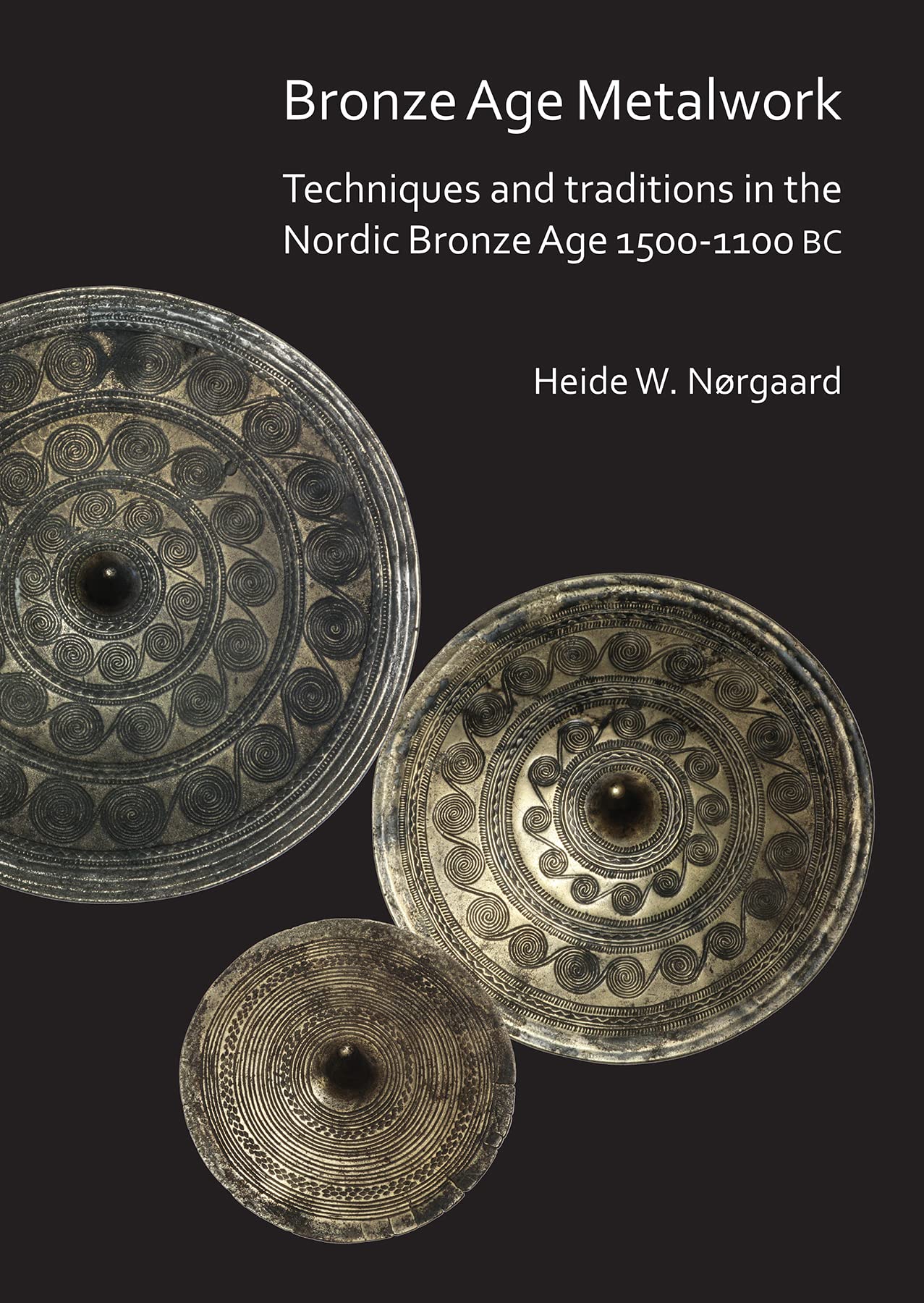
- ISBN-13 · 9781789690194
- ISBN-10 · 1789690196
- Publisher · Archaeopress Archaeology
- Format · paperback, 520 pages
- Published · 2019
- Language · English
Bronze Age Metalwork: Techniques and traditions in the Nordic Bronze Age 1500-1100 BC
Buy from a seller
No copies for sale right now.
Check back soon — sellers list new copies every day.
About this book
Bronze ornaments of the Nordic Bronze Age (neck collars, belt plates, pins and tutuli) were elaborate objects that served as status symbols to communicate social hierarchy. The magnificent metalwork studied here dates from 1500-1100 BC. An interdisciplinary investigation of the artefacts was adopted to elucidate their manufacture and origin, resulting in new insights into metal craft in northern Europe during the Bronze Age. Based on the habitus concept, which situates the craftsmen within their social and technological framework, individual artefact characteristics and metalworking techniques can be used to identify different craft practices, even to identify individual craftsmen. The conclusions drawn from this offer new insights into the complex organisation of metalcraft in the production of prestige goods across different workshops. Several kinship-based workshops on Jutland, in the Lüneburg Heath and Mecklenburg, allow us to conclude that the bronze objects were a display of social status and hierarchy controlled by, and produced for, the elite – as is also seen in the workshops on Zealand. Within the two main metalworking regions, Zealand and central Lower Saxony, workshops can be defined as communities of practice that existed with an extended market and relations with the local elite. Attached craft, in the sense that the craftspeople fully depended on a governing institution and produced artefacts as a manifestation of political expression, was only detected on Zealand between 1500-1300 BC. The investigation presented here showed that overall results could not be achieved when concentrating only on one aspect of metalwork. Highly skilled craft is to be found in every kind of workshop, as well as an intensive labour input. Only when considering skill in relation to labour input and also taking into account signs of apprenticeship and cross-craft techniques, as well as the different categories of mistakes in crafting, can a stable image of craft organisation be created.
Table of Contents
Preface
Introduction
Part 1 Material culture: Chapter 1: The examined material culture
Chapter 2: Presentation and Interpretation of the Examined Material Culture
Chapter 3: Archaeological residues of metalcraft within the Nordic Bronze Age
Part 2 Archaeological and Scientific Investigation: Chapter 1: Bronze Age Metalwork of NBA II/III in Northern Europe
Chapter 2: Bronze Age craftsmanship: a research history
Chapter 3: Experimental and ethnological research
Chapter 4: The Difference within metalworking techniques
Chapter 5: Casting techniques and casting moulds
Chapter 6: Crafting traces and crafting sequences
Chapter 7: Archaeometallurgical investigations
Chapter 8: It starts with the model – results of the craft-technical investigation
Part 3 Metalcraft in a theoretical light: Chapter 1: Theoretical approaches to craft in prehistoric times: a research History
Chapter 2: The craftsperson’s habitus
Chapter 3: Technological choices
Chapter 4: Apprenticeship and Bronze Age craft
Chapter 5: A new approach to the study of craft in prehistoric times
Part 4 Metalwork within the Nordic Bronze Age: Conclusion and Discussion: Chapter 1: Pattern of regional behaviour
Chapter 2: Traces of individual behaviour
Chapter 3: Traces of interaction groups of craftspeople – Traces of the analytical workshop
Chapter 4: The organisation of craft in the Nordic Bronze Age
Bibliography
Catalogue
Table 1: Morphological data
Table 2: Skill and production units
Table 3: Metal analysis