
Home / Search / Practical AI Security: A Hands-on Guide to Attacking, Defending, and Securing Modern AI Systems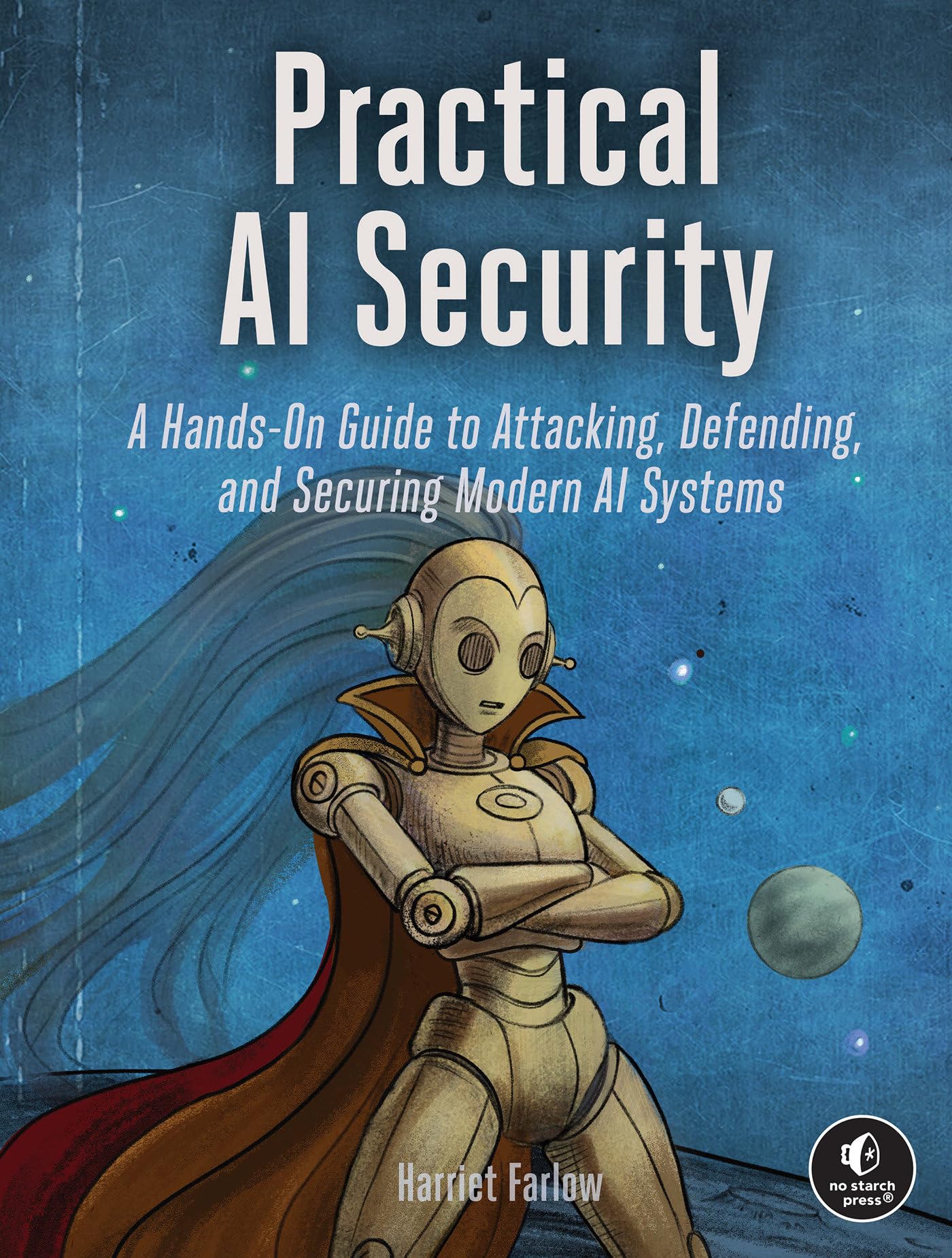
- ISBN-13 · 9781718504660
- ISBN-10 · 1718504667
- Publisher · No Starch Press
- Format · paperback, 392 pages
- Published · 2026
- Language · English
Practical AI Security: A Hands-on Guide to Attacking, Defending, and Securing Modern AI Systems
Rent this book
Free return shipping includedTotal rental price$26.00
Please Note: Rental books are typically used and do not come with any unused access code cards.
Return by 2026-12-08. Prepaid return label included; extend at any point for the difference in price.
Buy from a seller
No copies for sale right now — but you can rent it above.
Check back soon — sellers list new copies every day.
About this book
Break AI Systems. Then Secure Them.
If you’re a security practitioner learning to operate in AI environments, or an ML engineer who needs to understand what adversaries actually do, Practical AI Security gives you the technical foundation the field demands.
Built from first principles, this book takes you from how models fail to how they’re exploited to how they’re defended and audited. Every technique includes clear explanations and real-world examples, and you can run the attacks and defenses yourself with over 30 hands-on Python demos.
Understand how different kinds of machine learning models create unique vulnerabilities, and explore how these models are integrated into more autonomous, agentic AI systems to introduce new weaknesses and risks. Identify, exploit, and defend against dozens of weaknesses and attacks across the AI life cycle, including data poisoning, model theft, and prompt injection. Evaluate AI systems for safety failures, bias, and alignment risks using structured benchmarking. Threat-model agentic systems, RAG pipelines, and multimodal architectures using MITRE ATLAS, OWASP, and the MAESTRO framework. Design and execute AI-specific red teaming campaigns, and understand what makes them distinct from traditional security tests. Conduct rapid risk audits and navigate AI governance frameworks for real deployments.
Whether you use, build, deploy, or oversee AI, this isn’t niche knowledge—it’s the foundation for defending the technologies that will define the next era of human progress.