
Home / Search / Blacksmith's Manual Illustrated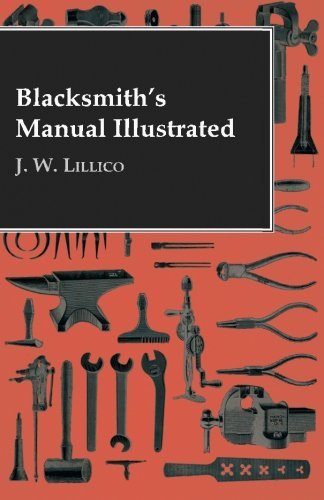
- ISBN-13 · 9781443772785
- ISBN-10 · 144377278X
- Publisher · Rimbault Press
- Format · Paperback, 232 pages
- Published · 2015
- Language · English
Blacksmith's Manual Illustrated
Buy from a seller
No copies for sale right now.
Check back soon — sellers list new copies every day.
About this book
This vintage book contains a practical treatise on the common methods of production for blacksmiths, apprentice blacksmiths, engineers, and others. Profusely illustrated and full of helpful tips, this volume provides a elementary introduction to the tools and techniques of the workshop, and is highly recommended for those with little previous experience. Contents include: “Forges for Hearths”, “Cast-Iron Forge”, “Brick Forge”, “Hearths”, “Pot Fire”, “Tools”, “Anvils”, “Hand Hammer”, “Tongs”, “Hand Tools”, “Anvil Tools”, “Clippers, etc.”, “Anvil Swages”, “Small Anvil”, “Angle Bar Tools”, “Cutters”, “Side Set Tools”, “Radius Tools”, “Spring Swages”, etc. Many vintage books such as this are becoming increasingly scarce and expensive. We are republishing “Blacksmith's Manual Illustrated” now in an affordable, high-quality edition complete with a specially commissioned new introduction on blacksmithing.
The smith who is well equipped with tools will often finish his job in one heat, whereas the smith using antiquated methods will require three or four heats for the same job. Some of the tools illustrated in this book might almost be called labour-saving gadgets, as in many cases they have no resemblance to the orthodox tool. The smith who has to rely on his striker has obviously to use different methods from the smith who has the advantage of the steam hammer. Rapid calculations plays an important part in modern smith work, and the smith who can reckon in figures the required length of material necessary to do a certain job has the advantage of his fellow workman who merely relies on guesswork. I do not suggest that the working blacksmith should be a skilled mathematician, and I have therefore embodied in this work one or two simple formulas for calculating length, which will be found to work out very well in practice. These formulas can quickly be acquired by memory, and the smith will then be saved the worry of wondering whether he has cut enough material for a job, or whether he is going to have a big waste of bar.
Blacksmithing is a trade difficult to learn. Well termed the King of Trades, practically every kindred trade depends on it in some shape or form.