
Home / Search / Fifty Strategies to Ensure K–6 Literacy Success: Aligning Instruction to the Five Pillars of Reading (Fifty evidence-based instructional strategies to support K–6 literacy success)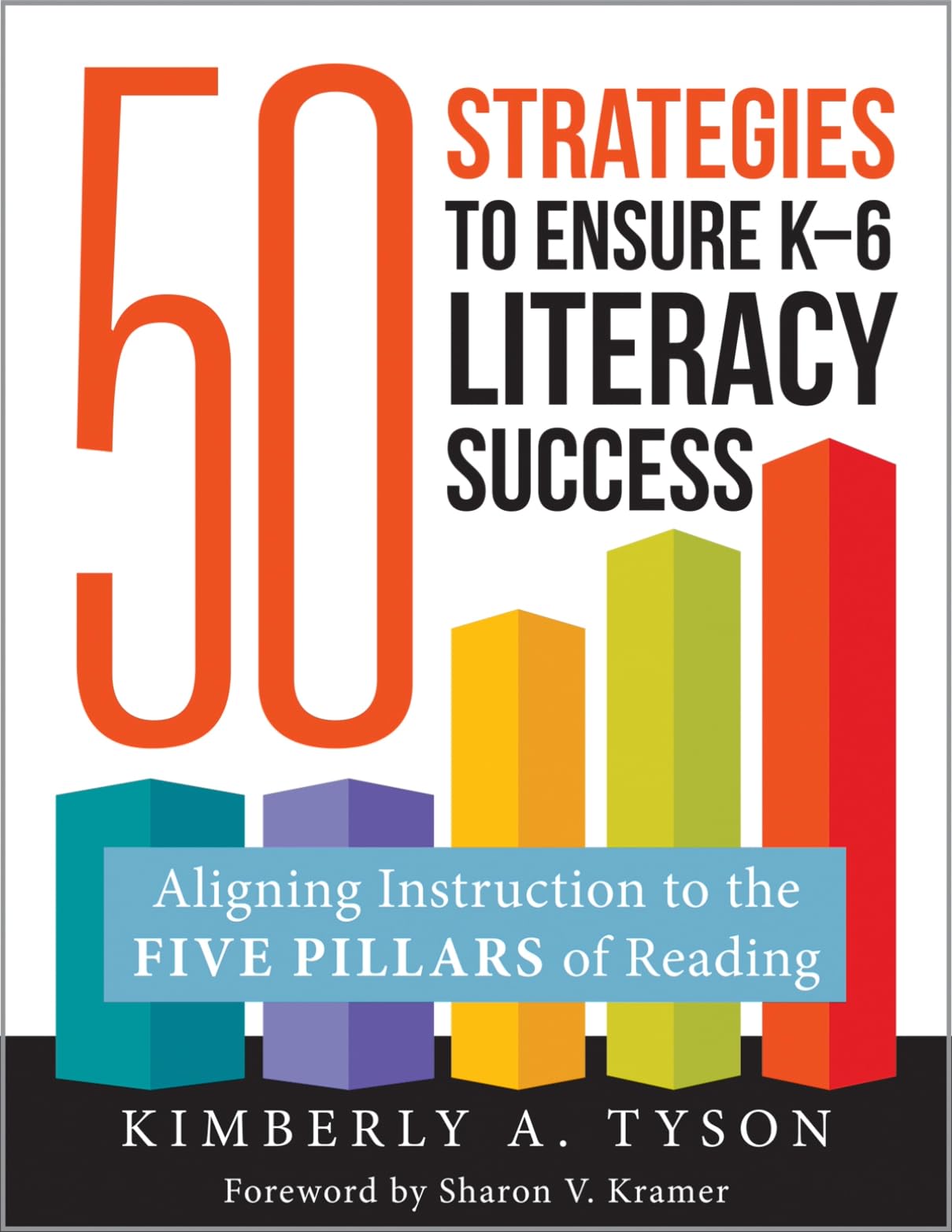
- ISBN-13 · 9798893740271
- Publisher · Solution Tree Press
- Format · perfect, 320 pages
- Published · 2025
- Language · English
Fifty Strategies to Ensure K–6 Literacy Success: Aligning Instruction to the Five Pillars of Reading (Fifty evidence-based instructional strategies to support K–6 literacy success)
Buy from a seller
No copies for sale right now.
Check back soon — sellers list new copies every day.
About this book
Ensure literacy success for all K–6 students with 50 evidence-based instructional strategies aligned to the five pillars of reading—phonemic awareness, phonics, fluency, vocabulary, and comprehension. In this timely and comprehensive resource for teachers, coaches, and principals, Dr. Kimberly Tyson includes strategies for struggling readers and English learners, key vocabulary, 10 online bonus strategies, and the “Leader’s Lens” to support principals.
K–6 teachers, coaches, and leaders can use the resources in this book to: Create a common language around the science of reading and the five pillars through the key vocabulary provided in each chapter Establish a literacy-rich classroom environment to support teaching and literacy learning Access 50 use-tomorrow instructional strategies for phonemic awareness, phonics, fluency, vocabulary, and comprehension Use the “Leader’s Lens” to provide supervision supports and classroom connections as principals lead and guide teachers Explore templates, key vocabulary, suggested professional resources, reproducibles, and 10 online bonus strategies
Contents:
Introduction
Chapter 1: The Literacy Landscape
Chapter 2: Phonemic Awareness—Building a Sound Foundation
Chapter 3: Phonics—Making the Sound–Symbol Match
Chapter 4: Fluency—Growing Fluent Readers
Chapter 5: Vocabulary—Word Learning Matters
Chapter 6: Comprehension—The Heart of Reading
Epilogue
Appendix
References and Resources
Index