
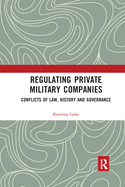
Regulating Private Military Companies: Conflicts of Law, History and Governance
Rent this book
Free return shipping includedPlease Note: Rental books are typically used and do not come with any unused access code cards.
Buy from a seller
About this book
This work examines the ability of existing and evolving PMC regulation to adequately control private force, and it challenges the capacity of international law to deliver accountability in the event of private military company (PMC) misconduct. From medieval to early modern history, private soldiers dominated the military realm and were fundamental to the waging of wars until the rise of a national citizen army. Today, PMCs are again a significant force, performing various security, logistics, and strategy functions across the world. Unlike mercenaries or any other form of irregular force, PMCs acquired a corporate legal personality, a legitimising status that alters the governance model of today. Drawing on historical examples of different forms of governance, the relationship between neoliberal states and private military companies is conceptualised here as a form of a 'shared governance'. It reflects states' reliance on PMCs relinquishing a degree of their power and transferring certain functions to the private sector. As non-state actors grow in authority, wielding power, and making claims to legitimacy through self-regulation, other sources of law also become imaginable and relevant to enact regulation and invoke responsibility.