
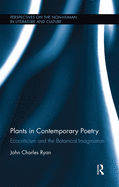
Plants in Contemporary Poetry: Ecocriticism and the Botanical Imagination
Rent this book
Free return shipping includedPlease Note: Rental books are typically used and do not come with any unused access code cards.
Buy from a seller
About this book
Positioned within current ecocritical scholarship, this volume is the first book-length study of the representations of plants in contemporary American, English, and Australian poetry. Through readings of botanically-minded writers including Les Murray, Louise Glück, and Alice Oswald, it addresses the relationship between language and the subjectivity, agency, sentience, consciousness, and intelligence of vegetal life. Scientific, philosophical, and literary frameworks enable the author to develop an interdisciplinary approach to examining the role of plants in poetry. Drawing from recent plant science and contributing to the exciting new field of critical plant studies, the author develops a methodology he calls "botanical criticism" that aims to redress the lack of emphasis on plant life in studies of poetry. As a subset of ecocriticism, botanical criticism investigates how poets engage with plants literally and figuratively, materially and symbolically, in their works. Key themes covered in this volume include plants as invasives and weeds in human settings; as sources of physical and spiritual nourishment; as signifiers of region, home, and identity; as objects of aesthetics and objectivism; and, crucially, as beings with their own perspectives, voices, and modes of dialogue. Ryan demonstrates that poetic imagination is as essential as scientific rationality to elucidating and appreciating the mysteries of plant-being. This book will appeal to a multidisciplinary readership in the fields of ecocriticism, ecopoetry, environmental humanities, and ecocultural studies, and will be of interest to researchers in the emerging area of critical plant studies.