
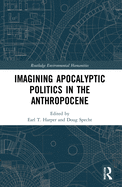
Imagining Apocalyptic Politics in the Anthropocene
Rent this book
Free return shipping includedPlease Note: Rental books are typically used and do not come with any unused access code cards.
Buy from a seller
About this book
Bringing together scholars from English literature, geography, politics, the arts, environmental humanities and sociology, Imagining Apocalyptic Politics in the Anthropocene contributes to the emerging debate between bodies of thought first incepted by scholars such as Mouffe, Whyte, Kaplan, Hunt, Swyngedouw and Malm about how apocalyptic events, narratives and imaginaries interact with societal and individual agency historically and in the current political moment. Exploring their own empirical and philosophical contexts, the authors examine the forms of political acting found in apocalyptic imaginaries and reflect on what this means for contemporary society. By framing their arguments around either pre-apocalyptic, peri-apocalyptic or post-apocalyptic narratives and events, a timeline emerges throughout the volume which shows the different opportunities for political agency the anthropocenic subject can enact at the various stages of apocalyptic moments.
Featuring a number of creative interventions exclusively produced for the work from artists and fiction writers who engage with the themes of apocalypse, decline, catastrophe and disaster, this innovative book will be of great interest to students and scholars of the politics of climate change, the environmental humanities, literary criticism and eco-criticism.