
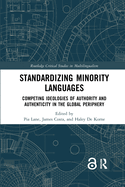
Standardizing Minority Languages: Competing Ideologies of Authority and Authenticity in the Global Periphery
Rent this book
Free return shipping includedPlease Note: Rental books are typically used and do not come with any unused access code cards.
Buy from a seller
About this book
The Open Access version of this book, available at https: //www.taylorfrancis.com/books/9781138125124, has been made available under a Creative Commons Attribution-Non Commercial-No Derivatives 4.0 license.
This volume addresses a crucial, yet largely unaddressed dimension of minority language standardization, namely how social actors engage with, support, negotiate, resist and even reject such processes. The focus is on social actors rather than language as a means for analysing the complexity and tensions inherent in contemporary standardization processes. By considering the perspectives and actions of people who participate in or are affected by minority language politics, the contributors aim to provide a comparative and nuanced analysis of the complexity and tensions inherent in minority language standardisation processes. Echoing Fasold (1984), this involves a shift in focus from a sociolinguistics of language to a sociolinguistics of people.
The book addresses tensions that are born of the renewed or continued need to standardize 'language' in the early 21st century across the world. It proposes to go beyond the traditional macro/micro dichotomy by foregrounding the role of actors as they position themselves as users of standard forms of language, oral or written, across sociolinguistic scales. Language policy processes can be seen as practices and ideologies in action and this volume therefore investigates how social actors in a wide range of geographical settings embrace, contribute to, resist and also reject (aspects of) minority language standardization.