
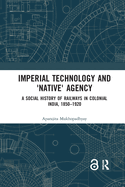
Imperial Technology and 'Native' Agency: A Social History of Railways in Colonial India, 1850-1920
Rent this book
Free return shipping includedPlease Note: Rental books are typically used and do not come with any unused access code cards.
Buy from a seller
About this book
This book explores the impact of railways on colonial Indian society from the commencement of railway operations in the mid-nineteenth to the early decades of the twentieth century.
The book represents a historiographical departure. Using new archival evidence as well as travelogues written by Indian railway travellers in Bengali and Hindi, this book suggests that the impact of railways on colonial Indian society were more heterogeneous and complex than anticipated either by India's colonial railway builders or currently assumed by post-colonial scholars.
At a related level, the book argues that this complex outcome of the impact of railways on colonial Indian society was a product of the interaction between the colonial context of technology transfer and the Indian railway passengers who mediated this process at an everyday level. In other words, this book claims that the colonised 'natives' were not bystanders in this process of imposition of an imperial technology from above. On the contrary, Indians, both as railway passengers and otherwise influenced the nature and the direction of the impact of an oft-celebrated 'tool of Empire'.
The historiographical departures suggested in the book are based on examining railway spaces as social spaces - a methodological index influenced by Henri Lefebvre's idea of social spaces as means of control, domination and power.