
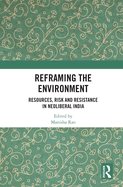
Reframing the Environment: Resources, Risk and Resistance in Neoliberal India
Rent this book
Free return shipping includedPlease Note: Rental books are typically used and do not come with any unused access code cards.
Buy from a seller
About this book
This volume unravels the underlying power relations that are masked in the present discourse of ecological sustainability and conflicts over natural resources. Current discussions on environment emphasise the use and abuse of the environment in various ways. This book looks at the inter-linkages of discourse, resources, risk and resistance in the contemporary neoliberal world. While exploring the experiences of neoliberalisation of nature in India, it brings out the intersections of conservation and management, science and gender, community politics and governance policies.
The volume highlights the cultural politics of resistance from multiple sites and regions in India in the recent context (be it land, water, forest, flora or fauna or urban commons). It discusses the ways in which environmental issues have come up and been appropriated, while examining the role of the State and actors such as corporates, traders, consultants, ecotourism companies, green activists and consumers, and consequences of 'green' appropriation and the 'growth' story. The major themes of the volume are the interrelations of nature, culture and power; neoliberal governance and the environment; access to and use and management of land, natural resources and environment; community politics and livelihoods; marginalised groups and local communities; marketisation and the environment; and new forms of re-appropriation and resistance.
This book will be of great interest to students and researchers in sociology, environmental studies, environmental history, environmental anthropology, political ecology, political science, geography, law and human rights, economics and development studies as well as to environmental activists, policy makers and those in media and journalism.