
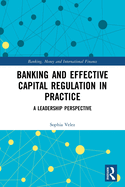
Banking and Effective Capital Regulation in Practice: A Leadership Perspective
Rent this book
Free return shipping includedPlease Note: Rental books are typically used and do not come with any unused access code cards.
Buy from a seller
About this book
Due to a historical lack of attention to the importance of modelling, measuring and managing risk, senior bank leaders are struggling to implement unified practices within their financial institutions that could address the gaps posed by risky management behaviour, rogue trading, liquidity crises, prohibited investments in mortgage-backed securities, and default risks aligned with loans. This book discusses the theories at play between bank agents (bank managers) and their principals (shareholders), a topic which has gained importance as a result of the banking crisis, and similarly, governed the need for more efficient risk management and ethical managerial practices.
The author worked with a senior bank leadership team to identify and describe effective capital regulation practices that can lead to a reduction in loss and risky management behavioural practices. The book offers consensus on a number of activities that bank managers can implement to address bank risk. It analyses the relevant factors that determine the necessity for banking regulation and the important role of regulation in managing banking crises. The author's analysis of the important regulatory aspects in developed countries such as the US, offers a useful conceptual framework for creating an adequate banking regulatory environment in developing countries.
This book offers an original contribution to the field of banking that undergraduate, masters, PhD students, academics and researchers can use to gain a deeper understanding of the constructs at play in the banking industry.