
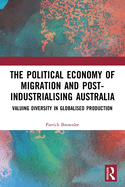
The Political Economy of Migration and Post-Industrialising Australia: Valuing Diversity in Globalised Production
Rent this book
Free return shipping includedPlease Note: Rental books are typically used and do not come with any unused access code cards.
Buy from a seller
About this book
During the 1980s and 1990s, Australia's migration intake turned rapidly towards recruiting business professionals, managers and entrepreneurs to support the country's entry into an economic system marked by global value chains. This book analyses the policy idea termed Productive Diversity, introduced by the Australian government as a way of conceptualising the belief that migrants would bring business acumen and a global outlook to help Australia compete as a trading nation.
The book examines this germinal period of Australia's economic reorientation through a close inspection of policy documents, parliamentary hearings, economic and migration statistics, and interviews with the architects of the policy. It provides a comprehensive account of how the policy framework emerged, how it was implemented, and studies the rationale in recruiting self-starters and managers to connect with global trade flows.
This work will be of interest to students and researchers of migration studies, especially Australian migration, diversity policies, sociology, multiculturalism, economics, development studies, and Asia-Pacific studies. The methods and data will also be of value to political economists and policy makers.