
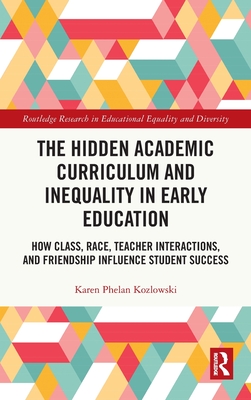
The Hidden Academic Curriculum and Inequality in Early Education: How Class, Race, Teacher Interactions, and Friendship Influence Student Success
Rent this book
Free return shipping includedPlease Note: Rental books are typically used and do not come with any unused access code cards.
Buy from a seller
About this book
Drawing on a rich ethnographic study conducted in first grade classrooms in the US, this book reveals the potentially invisible, yet significant ways that race and social class impact student success in the earliest years of their schooling.
The Hidden Academic Curriculum and Inequality in Early Education: How Class, Race, Teacher Interactions, and Friendship Influence Student Success
explores key differences observed between the classroom interactions and academic behaviors of racially, socially, and ethnically diverse first grade students. Chapters offer in-depth analysis of the ways in which classed and racialized coaching by families, differentiated teacher-student interactions, and racially segregated friendships play out in the school environment, and ultimately influence a child's ability to decode the academic hidden curriculum. This in turn, dictates a child's understanding and ability to perform the specific skills associated with academic success. Ultimately, the text highlights the critical need for improved understanding of how in- and out-of-school factors impact child behaviors, and offers key recommendations to prevent the perpetuation of racial and socioeconomic inequalities in schools and classrooms.This insightful volume will be of particular interest to postgraduate students, researchers, and academics in the fields of Early Childhood Education and the Sociology of Education. Those with a focus on racial, ethnic, and social inequalities more broadly, will also find the book of interest.