
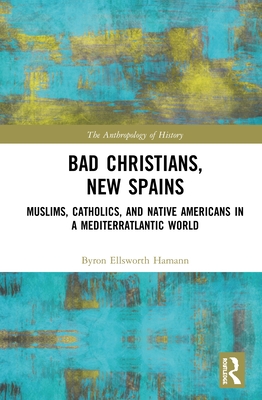
Bad Christians, New Spains: Muslims, Catholics, and Native Americans in a Mediterratlantic World
Rent this book
Free return shipping includedPlease Note: Rental books are typically used and do not come with any unused access code cards.
Buy from a seller
About this book
This book centers on two inquisitorial investigations, both of which began in the 1540s. One involved relations of Europeans and Native Americans in the Oaxacan town of Yanhuitlán (in New Spain, today's Mexico). The other involved relations of Moriscos (recent Muslim converts to Catholicism) and Old Christians (people with deep Catholic ancestries) in the Mediterranean kingdom of Valencia (in the "old" Spain).
Although separated by an ocean, the social worlds preserved in these inquisitorial files share many things. By bringing the two inquisitions together, Hamann reveals how very local practices and debates had long-distance parallels, parallels that reveal larger entanglements of the early modern world. Through a dialogue of two microhistories, he presents a macrohistory of large-scale social transformation. We see how attempts in both places to turn old worlds into new ones were centered on struggles over materiality and temporality. By paying close attention to theories (and practices) of reduction and conversion, Hamann suggests we can move beyond anachronistic models of social change as colonization, and place early modern concepts of time and history at the center of our understandings of the sixteenth-century past.
Overall, this project intervenes in major debates from both history and anthropology: about the writing of global histories, our conceptualizations of the colonial, the nature of religious and cultural change, and the roles of material things in social life and the imagination of time.