
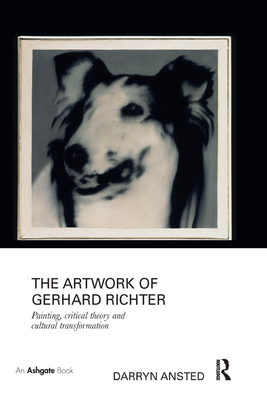
The Artwork of Gerhard Richter: Painting, Critical Theory and Cultural Transformation
Rent this book
Free return shipping includedPlease Note: Rental books are typically used and do not come with any unused access code cards.
Buy from a seller
About this book
By uniquely treating Gerhard Richter's entire oeuvre as a single subject, Darryn Ansted combines research into Richter's first art career as a socialist realist with study of his subsequent decisions as a significant contemporary artist. Analysis of Richter's East German murals, early work, lesser known paintings, and destroyed and unfinished pieces buttress this major re-evaluation of Richter's other well known but little understood paintings. By placing the reader in the artist's studio and examining not only the paintings but the fraught and surprising decisions behind their production, Richter's methodology is deftly revealed here as one of profound yet troubled reflection on the shifting identity, culture and ideology of his period. This rethinking of Richter's oeuvre is informed by salient analyses of influential theorists, ranging from Theodor Adorno to Slavoj Zizek, as throughout, meticulous visual analysis of Richter's changing aesthetic strategies shows how he persistently attempts to retrace the border between an objective reality structured by ideology and his subjective experience as a contemporary painter in the studio. Its innovative combination of historical accuracy, philosophical depth and astute visual analysis will make this an indispensible guide for both new audiences and established scholars of Richter's painting.