
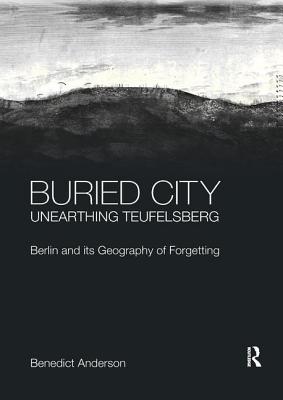
Buried City, Unearthing Teufelsberg: Berlin and Its Geography of Forgetting
Rent this book
Free return shipping includedPlease Note: Rental books are typically used and do not come with any unused access code cards.
Buy from a seller
About this book
Focusing on Berlin's destruction during World War II and its reconstruction after the end of the war, this book offers a rethinking of how the practices of destruction and burial combine to reform the city through geography and how burying a city is intricately tied to forgetting destruction, ruination and trauma. Created from 25 million cubic meters of rubble produced during World War II, Teufelsberg (Devil's Mountain) is the exemplar of the destroyed city. Its critical journey is chronicled in combination with Berlin's seven other rubble hills, and their connections to constructing forgetting through burial. Furthermore, the book investigates Berlin's sublime relation to Albert Speer's urban vision to rival the ancient cities of Rome and Athens through their now shared geographies of seven hills. Finally, there is a central focus on the role of the citizens who cleared Berlin's streets of rubble, and the subsequent human relationships between people and ruins.
This book is valuable reading for those interested in Architectural Theory, Urban Geography, Modern History and Urban Design.