
Home / Search / Electric Aircraft Dynamics: A Systems Engineering Approach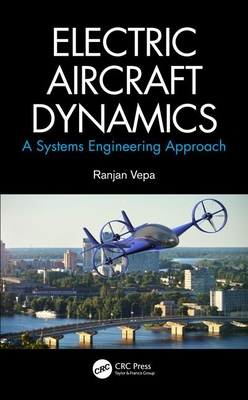
Provides the first systems-based overview of this emerging aerospace technology Surveys low-weight battery technologies and their use in electric aircraft propulsion Explores the design and use of plasma actuation for boundary layer and flow control Considers the integrated design of electric motor-driven propellers Includes PowerPoint slides for instructors using the text for classes
ISBN-13 · 9780367194246ISBN-10 · 0367194244Publisher · CRC PressFormat · Hardcover, 332 pagesPublished · 2020Language · English
Electric Aircraft Dynamics: A Systems Engineering Approach
Rent this book
Free return shipping includedTotal rental price$106.32
Please Note: Rental books are typically used and do not come with any unused access code cards.
Return by 2026-10-26. Prepaid return label included; extend at any point for the difference in price.
Buy from a seller
Bookface-OutletShips from CA
GoodTypical used book with minor wear and signs of use. May have some highlighting or writing.
279.85
About this book
Electric Aircraft Dynamics: A Systems Engineering Approach surveys engineering sciences that underpin the dynamics, control, monitoring, and design of electric propulsion systems for aircraft. It is structured to appeal to readers with a science and engineering background and is modular in format. The closely linked chapters present descriptive material and relevant mathematical modeling techniques. Taken as a whole, this ground-breaking text equips professional and student readers with a solid foundation for advanced work in this emerging field.
Key Features:
Dr. Ranjan Vepa
earned his PhD in applied mechanics from Stanford University, California. He currently serves as a lecturer in the School of Engineering and Material Science, Queen Mary University of London, where he has also been the programme director of the Avionics Programme since 2001. Dr. Vepa is a member of the Royal Aeronautical Society, London; the Institution of Electrical and Electronic Engineers (IEEE), New York; a Fellow of the Higher Education Academy; a member of the Royal Institute of Navigation, London; and a chartered engineer.