
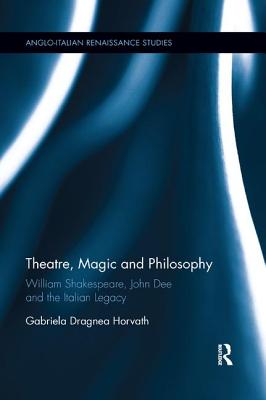
Theatre, Magic and Philosophy: William Shakespeare, John Dee and the Italian Legacy
Rent this book
Free return shipping includedPlease Note: Rental books are typically used and do not come with any unused access code cards.
Buy from a seller
About this book
Analyzing Shakespeare's views on theatre and magic and John Dee's concerns with philosophy and magic in the light of the Italian version of philosophia perennis (mainly Marsilio Ficino, Pico della Mirandola and Giordano Bruno), this book offers a new perspective on the Italian-English cultural dialogue at the Renaissance and its contribution to intellectual history. In an interdisciplinary and intercultural approach, it investigates the structural commonalities of theatre and magic as contiguous to the foundational concepts of perennial philosophy, and explores the idea that the Italian thinkers informed not only natural philosophy and experimentation in England, but also Shakespeare's theatre. The first full length project to consider Shakespeare and John Dee in juxtaposition, this study brings textual and contextual evidence that Gonzalo, an honest old Counsellor in The Tempest, is a plausible theatrical representation of John Dee. At the same time, it places John Dee in the tradition of the philosophia perennis-accounting for what appears to the modern scholar the conflicting nature of his faith and his scientific mind, his powerful fantasy and his need for order and rigor-and clarifies Edward Kelly's role and creative participation in the scrying sessions, regarding him as co-author of the dramatic episodes reported in Dee's spiritual diaries. Finally, it connects the Enochian/Angelic language to the myth of the Adamic language at the core of Italian philosophy and brings evidence that the Enochian is an artificial language originated by applying creatively the analytical instruments of text hermeneutics used in the Cabala.