
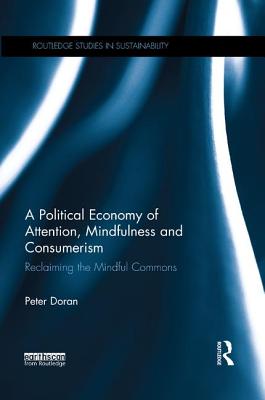
A Political Economy of Attention, Mindfulness and Consumerism: Reclaiming the Mindful Commons
Rent this book
Free return shipping includedPlease Note: Rental books are typically used and do not come with any unused access code cards.
Buy from a seller
About this book
The power of capital is the power to target our attention, mould market-ready identities, and reduce the public realm to an endless series of choices. This has far-reaching implications for our psychological, physical and spiritual well-being, and ultimately for our global ecology. In this consumer age, the underlying teachings of Buddhist mindfulness offer more than individual well-being and resilience. They also offer new sources of critical inquiry into our collective condition, and may point, in time, to regulatory initiatives in the field of well-being.
This book draws together lively debates from the new economics of transition, commons and well-being, consumerism, and the emerging role of mindfulness in popular culture. Engaged Buddhist practices and teachings correspond closely to insights in contemporary political philosophical investigations into the nature of power, notably by Michel Foucault. The 'attention economy' can be understood as a new arena of struggle in our age of neoliberal governmentality; as the forces of enclosure - having colonized forests, land and the bodies of workers - are now extended to the realm of our minds and subjectivity. This poses questions about the recovery of the 'mindful commons': the practices we must cultivate to reclaim our attention, time and lives from the forces of capitalization.
This is a valuable resource for students and scholars of environmental philosophy, environmental psychology, environmental sociology, well-being and new economics, political economy, environmental politics, the commons and law, as well as Buddhist theory and philosophy.