
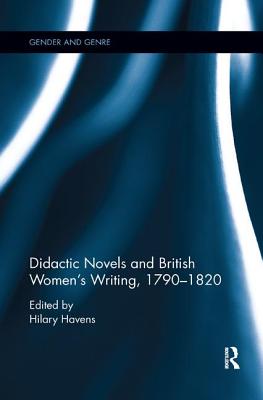
Didactic Novels and British Women's Writing, 1790-1820
Rent this book
Free return shipping includedPlease Note: Rental books are typically used and do not come with any unused access code cards.
Buy from a seller
About this book
Tracing the rise of conduct literature and the didactic novel over the course of the eighteenth century, this book explores how British women used the didactic novel genre to engage in political debate during and immediately after the French Revolution and the Napoleonic Wars. Although didactic novels were frequently conventional in structure, they provided a venue for women to uphold, to undermine, to interrogate, but most importantly, to write about acceptable social codes and values. The essays discuss the multifaceted ways in which didacticism and women's writing were connected and demonstrate the reforming potential of this feminine and ostensibly constricting genre. Focusing on works by novelists from Jane West to Susan Ferrier, the collection argues that didactic novels within these decades were particularly feminine; that they were among the few acceptable ways by which women could participate in public political debate; and that they often blurred political and ideological boundaries. The first part addresses both conservative and radical texts of the 1790s to show their shared focus on institutional reform and indebtedness to Mary Wollstonecraft, despite their large ideological range. In the second part, the ideas of Hannah More influence the ways authors after the French revolution often linked the didactic with domestic improvement and national unity. The essays demonstrate the means by which the didactic genre works as a corrective not just on a personal and individual level, but at the political level through its focus on issues such as inheritance, slavery, the roles of women and children, the limits of the novel, and English and Scottish nationalism. This book offers a comprehensive and wide-ranging picture of how women with various ideological and educational foundations were involved in British political discourse during a time of radical partisanship and social change.