
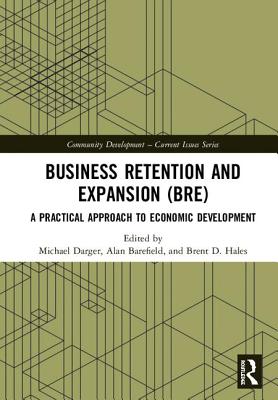
Business Retention and Expansion (BRE): A Practical Approach to Economic Development
Rent this book
Free return shipping includedPlease Note: Rental books are typically used and do not come with any unused access code cards.
Buy from a seller
About this book
Business retention and expansion (BRE) is regarded as the most practical and accessible method for economic development at the city, town, or neighborhood scale. This comprehensive volume centers on the belief that BRE is the top responsibility for a community economic development official. BRE is an asset-based approach designed to systematically strengthen the connection between businesses and the community while encouraging each business to continue operations and expand in the community. It focuses on the community's existing businesses instead of those it doesn't have.
This book illustrates many different facets of BRE, from big-picture and theory to lessons learned about BRE from practitioners and academics with diverse perspectives and backgrounds. The authors demonstrate diverse ways of reaching out and responding to existing businesses. They explore several topics related to or at the very heart of BRE including: business clusters, entrepreneurship, community outcomes, business assistance, transportation systems, energy efficiency, business succession, and defining BRE success. These include research, program evaluation, and case studies.
This book offers both theoretical and applied points of views, and will be of great interest to local practitioners, state/provincial officials, and students of economic development. It was originally published as a special issue of the journal Community Development.