
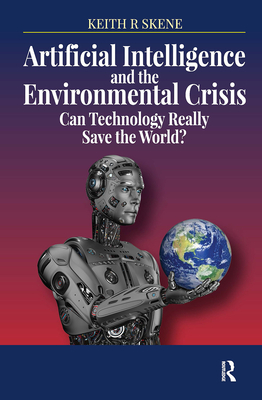
Artificial Intelligence and the Environmental Crisis: Can Technology Really Save the World?
Rent this book
Free return shipping includedPlease Note: Rental books are typically used and do not come with any unused access code cards.
Buy from a seller
About this book
A radical and challenging book which argues that artificial intelligence needs a completely different set of foundations, based on ecological intelligence rather than human intelligence, if it is to deliver on the promise of a better world. This can usher in the greatest transformation in human history, an age of re-integration. Our very existence is dependent upon our context within the Earth System, and so, surely, artificial intelligence must also be grounded within this context, embracing emergence, interconnectedness and real-time feedback. We discover many positive outcomes across the societal, economic and environmental arenas and discuss how this transformation can be delivered.
Key Features:
- Identifies a key weakness in current AI thinking, that threatens any hope of a better world.
- Highlights the importance of realizing that systems theory is an essential foundation for any technology that hopes to positively transform our world.
- Emphasizes the need for a radical new approach to AI, based on ecological systems.
- Explains why ecosystem intelligence, not human intelligence, offers the best framework for AI.
- Examines how this new approach will impact on the three arenas of society, environment and economics, ushering in a new age of re-integration.