
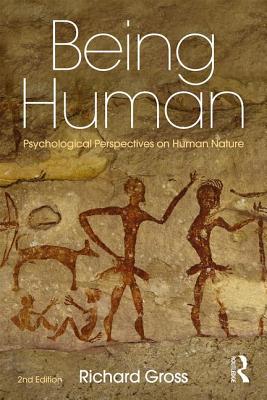
Being Human: Psychological Perspectives on Human Nature
Rent this book
Free return shipping includedPlease Note: Rental books are typically used and do not come with any unused access code cards.
Buy from a seller
About this book
While there may be no one single characteristic that differentiates humans as a species, it is the combination of differences from other species that makes us unique. The new edition of Being Human examines the psychology of being human through exploring different psychological traditions alongside philosophy and evolutionary theory, covering themes such as culture, cognition, language, morality, and society.
Our nature - or 'essence' - is something that has preoccupied human beings throughout our history, beginning with philosophy and religion, and continuing through the biological, social, and psychological sciences. Being Human begins by describing some of the major philosophical accounts of human nature, from Ancient Greek philosophers, such as Plato and Aristotle, to major British and Continental philosophers, such as Locke and Nietzsche. The book considers religious accounts of human nature, with their focus on the nature of good and evil, and scientific accounts of genetics and the brain, which underpin the distinctively human cognitive ability of language. Attention then turns to the ideas of the behaviourists, such as Skinner, Freud, and other psychodynamic psychologists, and humanistic-phenomenological psychologists, such as Maslow. Finally, human culture is discussed as the ultimate defining characteristic of human beings: culture represents our 'natural habitat' and what defines us as a species.
This updated second edition includes increased coverage of social psychology and has a broader scope, in order to identify the defining characteristics of human beings. With reference to current psychological research and philosophical material, this is fascinating reading for students of psychology, philosophy, and the social sciences.