
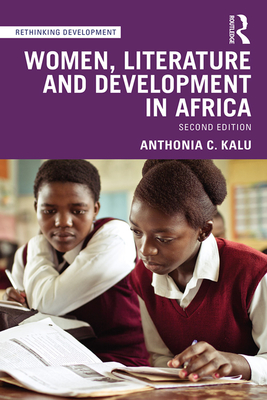
Women, Literature and Development in Africa
Rent this book
Free return shipping includedPlease Note: Rental books are typically used and do not come with any unused access code cards.
Buy from a seller
About this book
This book is a powerful exploration of the role of women in the evolution of African thinking and narratives on development, from the precolonial period right through to the modern day. Whilst the book identifies women's oppression and marginalization as significant challenges to contemporary Africa's advancement, it also explores how new written narratives draw on traditional African knowledge systems to bring deep-rooted and sometimes radical approaches to progress.
The book asserts that Africans must tell their own stories, expressed through the complex meanings and nuances of African languages and often conveyed through oral traditions and storytelling, in which women play an important role. The book's close examination of language and meaning in the African narrative tradition advances the illumination and elevation of African storytelling as part of a viable and valid knowledge base in its own right, rather than as an extension of European paradigms and methods.
Anthonia C. Kalu's new edition of this important book, fully revised throughout, will also include fresh analysis of the role of digital media, education, and religion in African narratives. At a time when the prominence and participation of African women in development and sociopolitical debates is growing, this book's exploration of their lived experiences and narrative contribution will be of interest to students of African literature, gender studies, development, history, and sociology.