
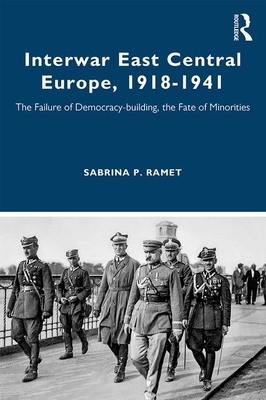
Interwar East Central Europe, 1918-1941: The Failure of Democracy-Building, the Fate of Minorities
Rent this book
Free return shipping includedPlease Note: Rental books are typically used and do not come with any unused access code cards.
Buy from a seller
About this book
This monograph focuses on the challenges that interwar regimes faced and how they coped with them in the aftermath of World War One, focusing especially on the failure to establish and stabilize democratic regimes, as well as on the fate of ethnic and religious minorities. Topics explored include the political systems and how they changed during the two decades under review, land reform, Church-state relations, and culture. Countries studied include Poland, Czechoslovakia, Hungary, Yugoslavia, Romania, Bulgaria, and Albania.
"Sabrina Ramet has assembled a team of highly respectable country specialists to offer a fresh and historiographically updated reading of interwar developments in East Central Europe. The volume is bookended by two excellent comparative and theoretically informed essays carefully weighing the multiplicity of factors contributing to the instability of the interwar regimes. As a result this survey succeeds admirably in producing a nuanced narrative and analysis." - Maria Todorova, University of Illinois at Urbana-Champaign, USA
Sabrina Ramet, together with a roster of other eminent scholars, has produced an exciting new history of interwar East Central Europe. The volume has a clear focus on the failure of democracy (1918 to 1941), and on the bedeviling issues of ethnic minorities and of peasants; the latter made up an overwhelming majority of much of the region's population. The book will be of great interest to political scientists and historians of East Central Europe, and of Europe more generally, and it is perfect for classroom use. - Irina Livezeanu, University of Pittsburgh, USA