
Home / Search / Honduras: Caudillo Politics and Military Rulers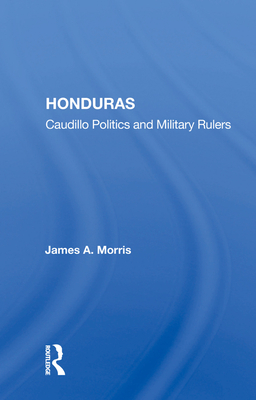
ISBN-13 · 9780367018726ISBN-10 · 0367018721Publisher · RoutledgeFormat · Hardcover, 176 pagesPublished · 2019Language · English
Honduras: Caudillo Politics and Military Rulers
Rent this book
Free return shipping includedTotal rental price$124.76
Please Note: Rental books are typically used and do not come with any unused access code cards.
Return by 2026-10-26. Prepaid return label included; extend at any point for the difference in price.
Buy from a seller
Bookface-OutletShips from CA
GoodTypical used book with minor wear and signs of use. May have some highlighting or writing.
290.29
About this book
Since the retirement of longtime dictator Tiburcio Car�as Andino (1932-1949), the search for institutional stability in Honduras has led to both democratically elected governments and the imposed discipline of military rule. Social and economic change has contributed to the growth of middle-class urban groups, strongly organized labor unions, and a vigorous peasant movement. The Honduran armed forces, established in modern form only after World War II, filled the vacuum of political power that developed as the Liberal and National political parties failed to address the problems created by change and national development, but the authoritarianism of military rule has been countered by historical patterns of caudillo politics. Despite the revolutionary turmoil that surrounds the country, Hondurans have successfully conducted national elections and installed a freely elected civilian government after more than ten years of military rule. It is within this mix of "traditional" and "praetorian" governing modes that Hondurans have fashioned a style of politics conducive to compromise, which accounts for the country's relative tranquillity today. In this first comprehensive study of contemporary Honduras--its land, people, economy, and politics--to be published in English, Dr. Morris also outlines the historical context that has shaped the society of this now geopolitically important nation and conditioned its political dynamics over the past three decades. His analysis illuminates the characteristics that distinguish Honduras from its Central American neighbors and that may dictate a unique course for its political evolution.