
Home / Search / The Last Days of the Jerusalem of Lithuania: Chronicles from the Vilna Ghetto and the Camps, 1939-1944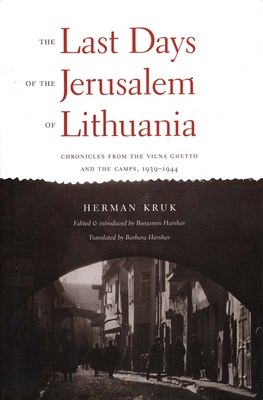
ISBN-13 · 9780300044942ISBN-10 · 0300044941Publisher · Yale University PressFormat · Hardcover, 816 pagesPublished · 2002Language · English
The Last Days of the Jerusalem of Lithuania: Chronicles from the Vilna Ghetto and the Camps, 1939-1944
Rent this book
Free return shipping includedTotal rental price$26.00
Please Note: Rental books are typically used and do not come with any unused access code cards.
Return by 2026-10-26. Prepaid return label included; extend at any point for the difference in price.
Buy from a seller
Bookface-OutletShips from CA
GoodTypical used book with minor wear and signs of use. May have some highlighting or writing.
63.33
About this book
For five horrifying years in Vilna, the Vilna ghetto, and concentration camps in Estonia, Herman Kruk recorded his own experiences as well as the life and death of the Jewish community of the city symbolically called "The Jerusalem of Lithuania." This unique chronicle includes many recovered pages of Kruk's diaries and provides a powerful eyewitness account of the annihilation of the Jewish communities of Eastern Europe. This volume includes the Yiddish edition of Kruk's diaries, published in 1961 and translated here for the first time, as well as many widely scattered pages of the chronicles, collected here for the first time and meticulously deciphered, translated, and annotated. Kruk describes vividly the collapse of Poland in September, 1939, life as a refugee in Vilna, the manhunt that destroyed most of Vilna Jewry in the summer of 1941, the creation of a ghetto and the persecution and self-rule of the remnants of the "Jerusalem of Lithuania," the internment of the last survivors in concentration camps in Estonia, and their brutal deaths. Kruk scribbled his final diary entry on September 17, 1944, managing to bury the small, loose pages of his manuscript just hours before he and other camp inmates were shot to death and their bodies burnt on a pyre. Kruk's writings illuminate the tragedy of the Vilna Jews and their courageous efforts to maintain an ideological, social, and cultural life even as their world was being destroyed. To read Kruk's day-by-day account of the unfolding of the Holocaust is to discern the possibilities for human courage and perseverance even in the face of profound fear.