
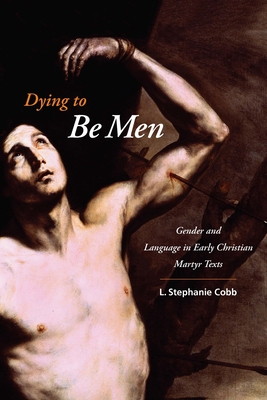
Dying to Be Men: Gender and Language in Early Christian Martyr Texts
Rent this book
Free return shipping includedPlease Note: Rental books are typically used and do not come with any unused access code cards.
Buy from a seller
About this book
At once brave and athletic, virtuous and modest, female martyrs in the second and third centuries were depicted as self-possessed gladiators who at the same time exhibited the quintessentially "womanly" qualities of modesty, fertility, and beauty. L. Stephanie Cobb explores the double embodiment of "male" and "female" gender ideals in these figures, connecting them to Greco-Roman virtues and the construction of Christian group identities.
Both male and female martyrs conducted their battles in the amphitheater, a masculine environment that enabled the divine combatants to showcase their strength, virility, and volition. These Christian martyr accounts also illustrated masculinity through the language of justice, resistance to persuasion, and-more subtly but most effectively-the juxtaposition of "unmanly" individuals (usually slaves, the old, or the young) with those at the height of male maturity and accomplishment (such as the governor or the proconsul).
Imbuing female martyrs with the same strengths as their male counterparts served a vital function in Christian communities. Faced with the possibility of persecution, Christians sought to inspire both men and women to be braver than pagan and Jewish men. Yet within the community itself, traditional gender roles had to be maintained, and despite the call to be manly, Christian women were expected to remain womanly in relation to the men of their faith. Complicating our understanding of the social freedoms enjoyed by early Christian women, Cobb's investigation reveals the dual function of gendered language in martyr texts and its importance in laying claim to social power.