
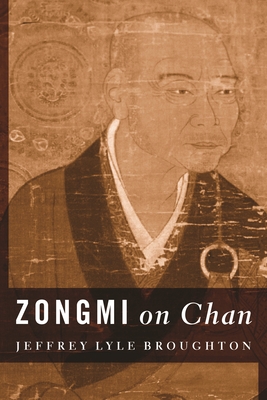
Zongmi on Chan
Rent this book
Free return shipping includedPlease Note: Rental books are typically used and do not come with any unused access code cards.
Buy from a seller
About this book
Japanese Zen often implies that textual learning (gakumon) in Buddhism and personal experience (taiken) in Zen are separate, but the career and writings of the Chinese Tang dynasty Chan master Guifeng Zongmi (780-841) undermine this division. For the first time in English, Jeffrey Broughton presents an annotated translation of Zongmi's magnum opus, the Chan Prolegomenon, along with translations of his Chan Letter and Chan Notes.
The Chan Prolegomenon persuasively argues that Chan "axiom realizations" are identical to the teachings embedded in canonical word and that one who transmits Chan must use the sutras and treatises as a standard. Japanese Rinzai Zen has, since the Edo period, marginalized the sutra-based Chan of the Chan Prolegomenon and its successor text, the Mind Mirror (Zongjinglu) of Yongming Yanshou (904-976). This book contains the first in-depth treatment in English of the neglected Mind Mirror, positioning it as a restatement of Zongmi's work for a Song dynasty audience.
The ideas and models of the Chan Prolegomenon, often disseminated in East Asia through the conduit of the Mind Mirror, were highly influential in the Chan traditions of Song and Ming China, Korea from the late Koryo onward, and Kamakura-Muromachi Japan. In addition, Tangut-language translations of Zongmi's Chan Prolegomenon and Chan Letter constitute the very basis of the Chan tradition of the state of Xixia. As Broughton shows, the sutra-based Chan of Zongmi and Yanshou was much more normative in the East Asian world than previously believed, and readers who seek a deeper, more complete understanding of the Chan tradition will experience a surprising reorientation in this book.