
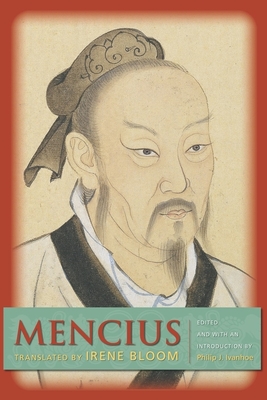
Mencius
Rent this book
Free return shipping includedPlease Note: Rental books are typically used and do not come with any unused access code cards.
Buy from a seller
About this book
Known throughout East Asia as Mengzi, or "Master Meng," Mencius (391-308 B.C.E.) was a Chinese philosopher of the late Zhou dynasty, an instrumental figure in the spread of the Confucian tradition, and a brilliant illuminator of its ideas. Mencius was active during the Warring States Period (403-221 B.C.E.), in which competing powers sought to control the declining Zhou empire. Like Confucius, Mencius journeyed to one feudal court after another, searching for a proper lord who could put his teachings into practice. Only a leader who possessed the moral qualities of a true king could unify China, Mencius believed, and in his defense of Zhou rule and Confucian philosophy, he developed an innovative and highly nuanced approach to understanding politics, self-cultivation, and human nature, profoundly influencing the course of Confucian thought and East Asian culture.
Mencius is a record of the philosopher's conversations with warring lords, disciples, and adversaries of the Way, as well as a collection of pronouncements on government, human nature, and a variety of other philosophical and political subjects. Mencius is largely concerned with the motivations of human actors and their capacity for mutual respect. He builds on the Confucian idea of ren, or humaneness, and places it alongside the complementary principle of yi, or rightness, advancing a complex notion of what is right for certain individuals as they perform distinct roles in specific situations. Consequently, Mencius's impact was felt not only in the thought of the intellectual and social elite but also in the value and belief systems of all Chinese people.