
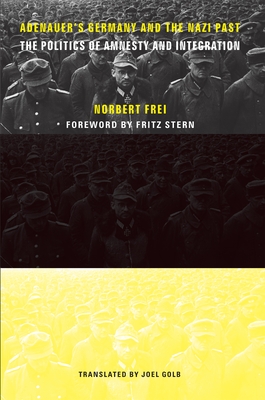
Adenauer's Germany and the Nazi Past: The Politics of Amnesty and Integration
Rent this book
Free return shipping includedPlease Note: Rental books are typically used and do not come with any unused access code cards.
Buy from a seller
About this book
Of all the aspects of recovery in postwar Germany perhaps none was as critical or as complicated as the matter of dealing with Nazi criminals, and, more broadly, with the Nazi past. While on the international stage German officials spoke with contrition of their nation's burden of guilt, at home questions of responsibility and retribution were not so clear. In this masterful examination of Germany under Adenauer, Norbert Frei shows that, beginning in 1949, the West German government dramatically reversed the denazification policies of the immediate postwar period and initiated a new "Vergangenheitspolitik," or "policy for the past," which has had enormous consequences reaching into the present.
Adenauer's Germany and the Nazi Past chronicles how amnesty laws for Nazi officials were passed unanimously and civil servants who had been dismissed in 1945 were reinstated liberally--and how a massive popular outcry led to the release of war criminals who had been condemned by the Allies. These measures and movements represented more than just the rehabilitation of particular individuals. Frei argues that the amnesty process delegitimized the previous political expurgation administered by the Allies and, on a deeper level, served to satisfy the collective psychic needs of a society longing for a clean break with the unparalleled political and moral catastrophe it had undergone in the 1940s. Thus the era of Adenauer devolved into a scandal-ridden period of reintegration at any cost. Frei's work brilliantly and chillingly explores how the collective will of the German people, expressed through mass allegiance to new consensus-oriented democratic parties, cast off responsibility for the horrors of the war and Holocaust, effectively silencing engagement with the enormities of the Nazi past.