
Home / Search / Analyzing Classical Form: An Approach for the Classroom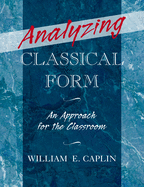
ISBN-13 · 9780199987290ISBN-10 · 0199987297Publisher · OUP UsFormat · Paperback, 768 pagesPublished · 2013Language · English
Analyzing Classical Form: An Approach for the Classroom
Rent this book
Free return shipping includedTotal rental price$48.55
Please Note: Rental books are typically used and do not come with any unused access code cards.
Return by 2026-10-26. Prepaid return label included; extend at any point for the difference in price.
Buy from a seller
Bookface-OutletShips from CA
GoodTypical used book with minor wear and signs of use. May have some highlighting or writing.
95.36
About this book
Analyzing Classical Form builds upon the foundations of the author's critically acclaimed Classical Form by offering an approach to the analysis of musical form that is especially suited for classroom use. Providing ample material for study in both undergraduate and graduate courses, Analyzing Classical Form presents the most up-to-date version of the author's "theory of formal functions." Students will learn how to make complete harmonic and formal analyses of music drawn from the instrumental works of Haydn, Mozart, and Beethoven. Part 1 introduces the principal theme-types of classical instrumental music; part 2 provides a methodology for analyzing sonata form, the most important formal type in this style period; and part 3 considers other full-movement forms found in this repertory (such as minuet, rondo, and concerto). The chapters are organized in a way that presents the most basic materials upfront and then leads the student through more details and finer points of theory. Every topic is illustrated with annotated musical examples; as well, the book contains many unannotated examples that can be used for in-class discussion and for out-of-class analytical exercises. A complete glossary of terms and questions for reviewing the theory will help students assimilate the many theoretical concepts employed in the book. A companion website hosted by the author at music.mcgill.ca/acf/ provides audio and musical scores for all of the examples in the book as well as additional examples for the analysis of the simple theme-types presented in part 1.