Home / Search / Hearing in Time: Psychological Aspects of Musical Meter
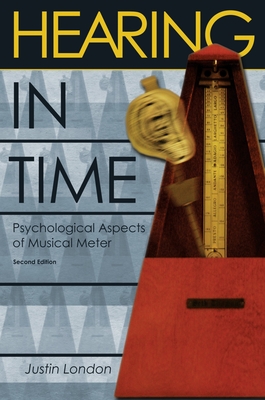
Cover of Hearing in Time: Psychological Aspects of Musical Meter
ISBN-13 · 9780199744374ISBN-10 · 0199744378Publisher · Oxford University PressFormat · Paperback, 252 pagesPublished · 2012Language · English

Hearing in Time: Psychological Aspects of Musical Meter

Rent this book

Free return shipping included
Total rental price$26.00

Please Note: Rental books are typically used and do not come with any unused access code cards.

Return by 2026-10-26. Prepaid return label included; extend at any point for the difference in price.

Buy from a seller

Bookface-OutletShips from CA
GoodTypical used book with minor wear and signs of use. May have some highlighting or writing.
57.20

About this book

Our sense that a waltz is "in three" or a blues song is "in four with a shuffle" comes from our sense of musical meter. Hearing in Time explores the metric aspect of our musical experience from a psychological point of view. Musical meter is subject to a number of fundamental perceptual and cognitive constraints. These constraints are the cornerstones of Hearing in Time's account of musical meter. Hearing in Time also takes into account the fact that listening to music, like many other rhythmic activities, is something that we do a lot. It also approaches meter in the context of music as it is actually performed, with nuances of timing and dynamics, rather than as a theoretical idealization.

Hearing in Time's approach to meter is not based on any particular musical style or cultural practice, and it discusses musical examples from a wide range of musical styles and cultures--from Beethoven and Bach to Brubeck and Ghanaian (Ewe) drumming. In taking this broad approach a number of fundamental similarities between a variety of different metric phenomena--such as the difference between so-called simple versus complex or additive meters - become apparent.

Requiring only a modest ability to read a musical score, Hearing in Time is written for musicians, musicologists, and music theorists, as well as psychologists, linguists and cognitive scientists who are interested in rhythm and meter.