
Home / Search / Laws 1 and 2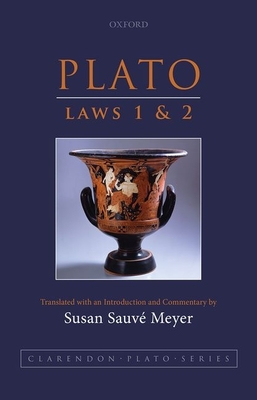
ISBN-13 · 9780199604081ISBN-10 · 0199604088Publisher · Oxford University Press (UK)Format · Hardcover, 376 pagesPublished · 2015Language · English
Laws 1 and 2
Rent this book
Free return shipping includedTotal rental price$43.45
Please Note: Rental books are typically used and do not come with any unused access code cards.
Return by 2026-10-26. Prepaid return label included; extend at any point for the difference in price.
Buy from a seller
Bookface-OutletShips from CA
GoodTypical used book with minor wear and signs of use. May have some highlighting or writing.
85.52
About this book
Susan Sauvé Meyer presents a new translation of Plato's Laws, 1 and 2. In these opening books of Plato's last work, a Cretan, a Spartan, and an Athenian discuss legislative theory, moral psychology, and the criteria for evaluating art. The interlocutors compare the relative merits of different nomoi (laws, practices, institutions), in particular, the communal meals (sussitia) practiced in Sparta and Crete and the paradigmatically Athenian institution of the drinking party (sumposion). They agree that the legislator's goal is to inculcate virtue in the citizens, but they disagree about what the virtues are, and what institutions are required to inculcate them. The Spartan and Cretan, who value military strength in a city and courage in its citizens, see no value in drinking parties, which they take to encourage softness and susceptibility to pleasure. The Athenian insists that drinking parties train citizens in moderation, just as military exercises train citizens in courage. He
defends this paradoxical thesis by offering a moral psychology and theory of virtue (rather different from that of the Republic but highly evocative of Aristotle's Ethics), along with a theory of education in which choral song and dance play an important role. A detailed discussion of the criteria for evaluating works of art rounds out the discussion, and here too the reader will find a discussion very different from the treatment of art in the Republic.
defends this paradoxical thesis by offering a moral psychology and theory of virtue (rather different from that of the Republic but highly evocative of Aristotle's Ethics), along with a theory of education in which choral song and dance play an important role. A detailed discussion of the criteria for evaluating works of art rounds out the discussion, and here too the reader will find a discussion very different from the treatment of art in the Republic.
Meyer's fluent and readable translation achieves a high standard of fidelity to the original Greek. The commentary lays bare the structure of the argumentation, illuminates the philosophical issues, and explains difficult passages, making this complex and intricate work accessible to students and scholars alike.