
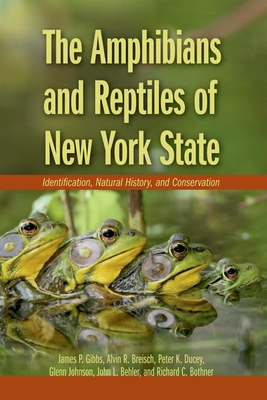
Amphibians and Reptiles of New York State: Identification, Natural History, and Conservation
Rent this book
Free return shipping includedPlease Note: Rental books are typically used and do not come with any unused access code cards.
Buy from a seller
About this book
conservation of the amphibians and reptiles of New York State fill a long-empty niche.
The book is the first comprehensive presentation of the distributional data gathered for the New York State Amphibian and Reptile Atlas project. With more than 60,000 records compiled from 1990-1999, this extraordinary and up-to-date database provides a rich foundation for the book. This volume
provides detailed narratives on the 69 species native to New York State. With a heavy emphasis on conservation biology, the book also includes chapters on threats, legal protections, habitat conservation guidelines, and conservation case studies.
Also included are 67 distribution maps and 62 pages of color photographs contributed by more than 30 photographers. As a field guide or a desk reference, The Amphibians and Reptiles of New York State is indispensable for anyone interested in the vertebrate animals of the Northeast, as well as
students, field researchers and natural resource professionals.